
Locard’s exchange principle in forensic science dictates that the perpetrator of a crime will both leave something at a scene and take something from it. As Paul L Kirk puts it, “Wherever he steps, whatever he touches, whatever he leaves, even unconsciously, will serve as a silent witness against him. . . . All of these and more, bear mute witness against him. This is evidence that does not forget.”
The same could be said about our lives. When we enter someone’s life, we both leave something behind and take something with us. When someone enters ours, they give to us and take from us.
Most tend to go in and out without paying much mind to this, especially in today’s culture of convenience. We let conversations die as fast as we start them, ghost as quickly as we swipe right – we are transients between one another in a world where meaningful connections may be few and far between. Through this, we do each other some disservice. We often give as little consideration and closure as we receive. Though there is nothing wrong with coming and going, we can be better. We can do better.
I, like many others, have been left with burdens of trauma, the questioning that comes with being abruptly discarded, and many unpleasant memories. But I have also been granted with moments enthralling for their fleeting nature, priceless lessons, and a unique understanding of life that I would not trade for the world. This is the trace evidence of those that have entered and exited my life. I can only hope that I have given others even a fraction of this beauty. I would like for them to be able to look at what I left behind and be filled with happiness, or in the very least, peace.
In the decision to be more mindful of even the smallest things we do everyday, we can extend this to become custodians of our own trace evidence. What are we leaving behind? What are we taking with us? It can be as little as leaving the coffee barista with a smile instead of a headache or as significant as learning something from everyone we meet. There is an exchange to be made with every encounter, no matter how small or seemingly trivial. Each one is an opportunity to give and take something positive, something good we can take with us on our respective journeys.
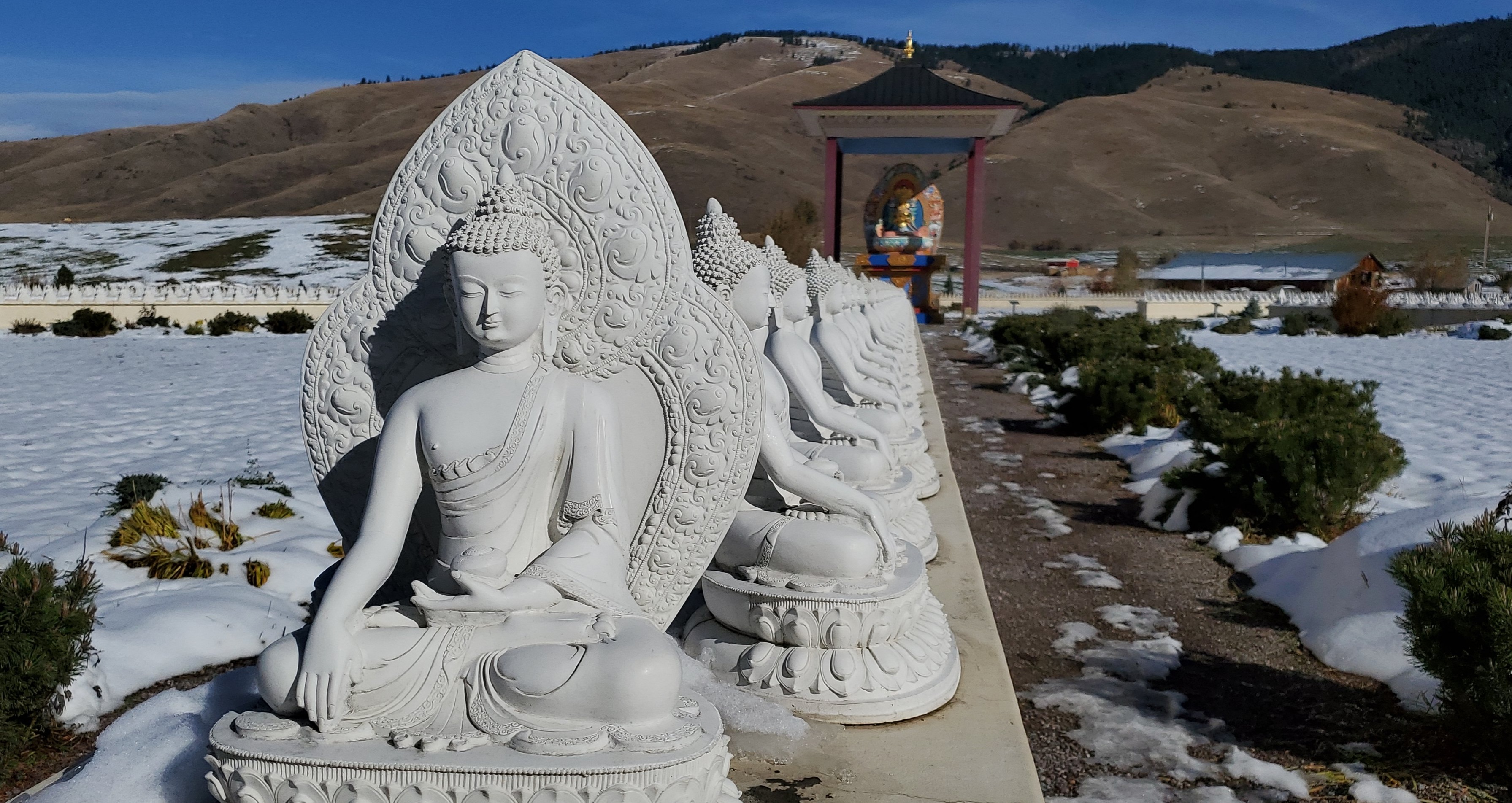
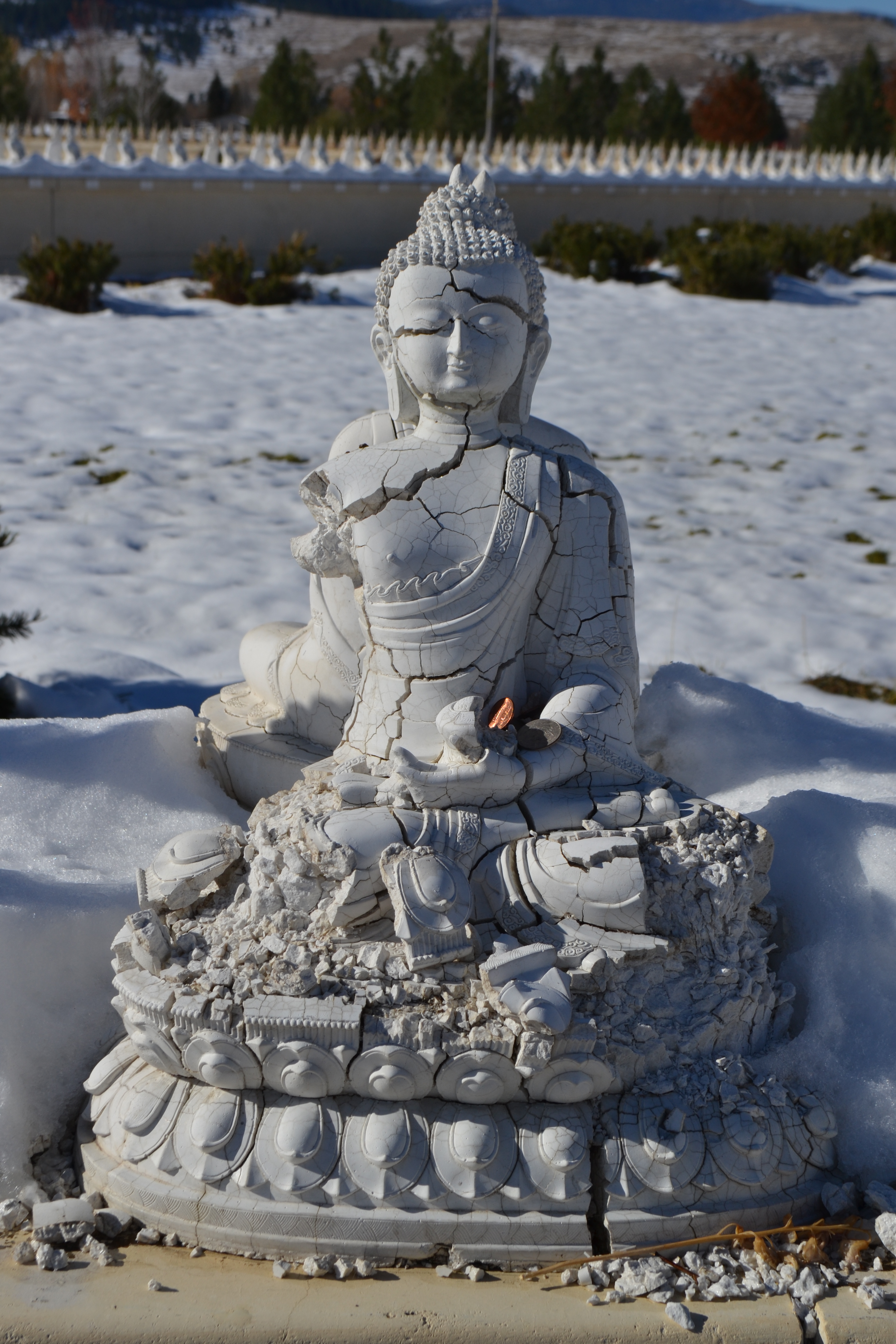
I chose this photo I took at the Garden of One Thousand Buddhas in Arlee, Montana for a very specific reason. This location lived up to it’s name – there are many identical white Buddha statues on each of the eight spokes in the garden modeled after the wheel of dharma. I added this stop to my journey back home because I lean into Buddhism but found that it was more meaningful to me than just a point of interest.
As I walked through the garden taking in my surroundings, taking pictures and reflecting on how peaceful it was, I noticed that not all the Buddha statues were completely intact. Some were perfect and must have been cast recently but others were almost crumbled to an extent that they were unrecognizable. However, the placement of coins – a symbolic gesture of good karma or thanks – seemed to be consistent among them regardless of their state of decay. Even as the figure the offering was made to disintegrated back to dust, a shining reminder of good will remained.
I would like to think that our actions, our demonstrations of love no matter how small, are much the same. Even as our relationships – our presence in the lives of others, or our own lives in themselves – come to an end, the trace evidence of our will endures.
I left a handful of coins behind that day in hopes of creating merits, to express my gratitude for the teachings of dharma and towards the universe. But I took with me a feeling of peace and enlightenment, a souvenir that will last longer than anything you can buy in a gift shop.
 travelingpunk.com